

The Shadow She Carried
A story of moonlight, grief and silence

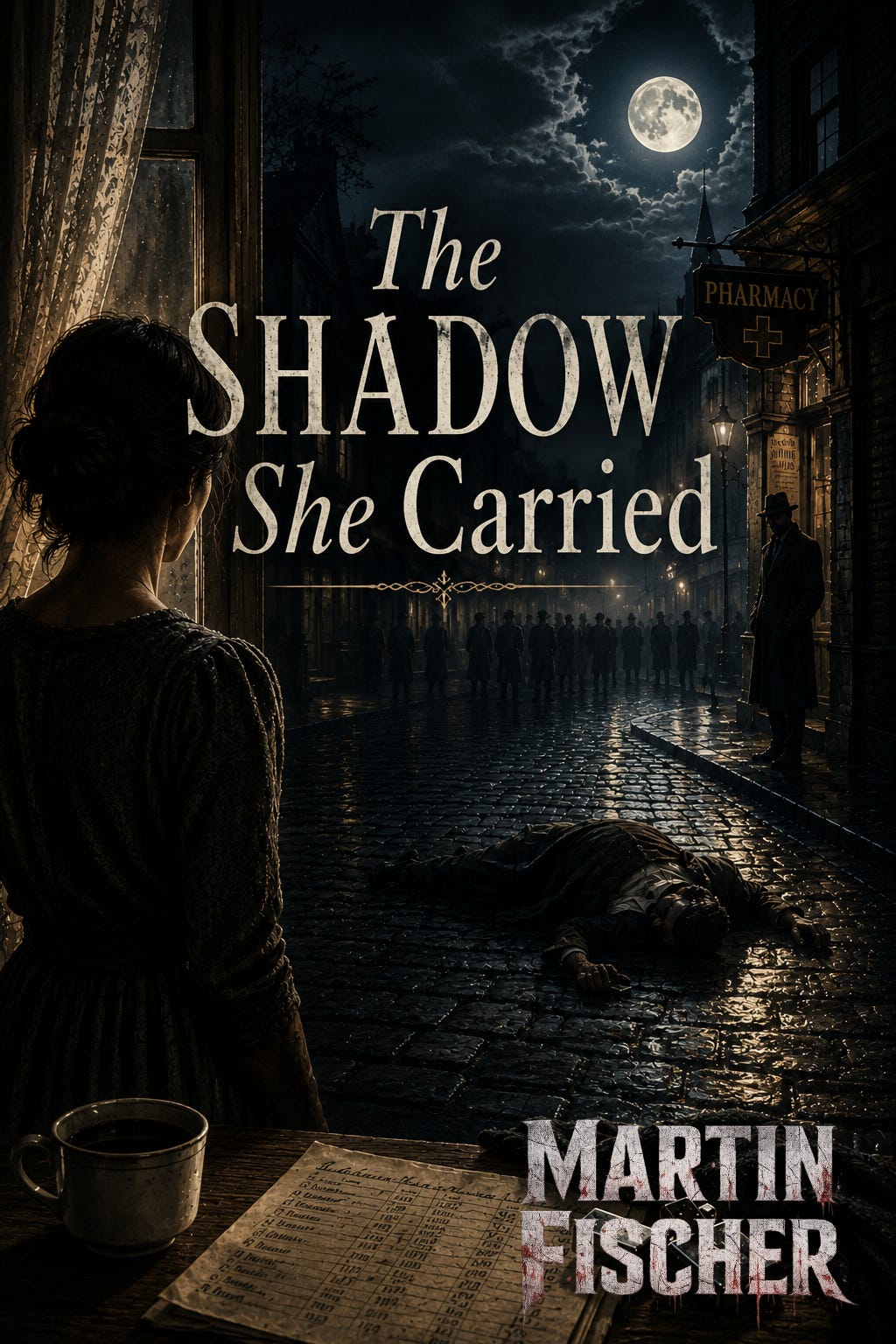
The last time Anna saw Elias alive, he was standing in moonlight.
It lay across the kitchen floor and touched the side of his face, so that one half of him seemed already elsewhere. His coat was over his arm. His hair was still damp from the evening rain. He always came home carrying weather with him. Rain in his hair, cold in his sleeves, the smell of the street clinging to wool.
On the table behind him stood the cup he had not finished.
Anna noticed that later. In the moment she noticed his hand on the back of the chair. Long fingers. A small scar near the thumb from the winter he had tried to repair the stove himself and filled the kitchen with smoke.
“You’ll come back?” she asked.
He smiled as if the answer were simple.
“Of course.”
They had known each other long enough to lie kindly.
Elias had changed in recent weeks.
He listened when cars slowed outside. He stopped talking when certain names came up. Twice Anna had found him in the kitchen after midnight with all the lights off, smoking and watching the street.
Once, through the front window, she had seen a man standing beneath the pharmacy sign across the road.
Not tall in any remarkable way.
Not hidden.
That was what frightened her later.
He looked almost ordinary, except for his left hand, folded inside his coat as if he were holding something there or keeping something from falling out.
When Elias noticed him, he went pale.
“Who is that?” Anna asked.
“No one.”
But after the man left, Elias locked the door.
Elias worked at the print shop near the station. Most days he came home smelling of ink, dust and machine oil. The shop printed voting notices, address lists, council forms, campaign leaflets. Elias used to say a town confessed itself in paper.
Then one evening he came home and said, “There are names on the lists who have been dead for years.”
Anna looked up from the stove.
“What lists?”
He shook his head.
“Forget I said that.”
But she did not.
After that came smaller things. Receipts printed twice. Ledger pages missing. Old signatures appearing where they should not. Nothing large enough to hold. Everything small enough to deny.
That evening, while Anna washed the plates, Elias stood in the hall with his coat already on.
“Elias.”
He looked back.
“Where are you going?”
“Out.”
“At this hour?”
The clock ticked above the stove. Outside, the moon had climbed clear of the roofs.
“You’re frightening me,” she said.
He crossed the room and touched her cheek with the back of his fingers.
“I need to speak to someone.”
“Who?”
“The only person who might still tell the truth.”
“Then let me come.”
“No.”
The word came too quickly.
“In the morning,” he said, softer, “we’ll get bread from the bakery.”
“The dark loaf?”
“The one with seeds along the crust.”
A small promise.
Almost nothing.
That was why it stayed.
He kissed her once.
Not quickly.
Not as a man in danger.
As a man trying to leave behind the version of himself he hoped she would remember.
Outside, the street was silver and empty. Somewhere far off, a car moved through another part of town. Somewhere a radio played faintly behind a window before going silent again.
Elias went down the steps.
Anna watched him walk away until the dark took him without hurry.
For a while she remained at the open door. The cold entered the house around her feet. At last she shut it.
Then she looked for what he had hidden.
Not because she distrusted him.
Because fear had made her practical.
She found the folded paper in the pocket of his work coat, the one he had left behind the pantry door because the raincoat over his arm was drier and less marked with ink. It was a proof sheet, creased twice and stained with ink.
A list of names.
Addresses.
Numbers marked beside them.
Then she saw the crosses.
Three of the names belonged to people buried in the churchyard.
One had been Elias’ own father.
For a long time she could only stare at that name.
Jakob Keller.
Dead seven years.
Still useful to someone.
Anna folded the paper once, then again, as if making it smaller could make it less true. Something narrowed inside her. No vow came to her. No brave sentence. Only a hard white line drawn through the place where grief would soon arrive.
The house made its small night sounds around her.
The clock moved.
The room cooled.
The moonlight shifted from the floor to the wall.
She washed Elias’ cup and regretted it at once. The small brown ring vanished into the sink. A useless thing to mourn, so she mourned it completely.
Near four in the morning she heard a car outside.
Not stopping.
Idling.
Then moving on.
She sat upright in bed.
Silence returned.
Then came the shots.
Sharp.
Then another.
Then more, broken strangely by distance and stone.
She counted six, though later people argued about the number.
Her body had understood before her mind.
At the door she stopped with her hand on the latch. For one terrible second she believed that if she did not open it, nothing would have happened yet. Elias would still be somewhere beneath the same moon. Still walking. Still alive.
Then there were voices outside.
Running feet.
A shout.
She opened the door.
The air struck her cold and clean.
People were gathering at the far end of the street. Windows lit one by one above them. Someone called for help. Someone else said not to touch him.
Anna ran.
The moonlight made everything too clear. The wet stones. The pale faces. The shadows stretching across the road like cracks in ice. She pushed through the crowd or tried to. Hands held her back. A man said her name. A woman began to cry before Anna saw what they were all seeing.
Elias lay on the ground in the pale light.
His coat was open.
One hand rested beside him as if he had dropped something small and meant to pick it up again.
She said his name.
He did not move.
She said it again, softer, because the first time had sounded wrong in the street.
Someone told her not to look.
But she looked.
His face was turned slightly toward the moon. His eyes were closed. That was what she remembered afterward with gratitude and hatred both. That his eyes were closed.
She tried to reach him.
The crowd tightened around her.
“I have to,” she said.
No one answered.
People spoke all around her.
A dark car.
A man running.
Two men.
No men.
A hat near the corner.
No hat at all.
Every version sounded certain for exactly one minute before another replaced it.
Then Anna looked past them.
Across the street, beneath the pharmacy sign, stood the man she had seen before.
Not hidden.
Not hurrying away.
His left hand was folded inside his coat.
He was watching Elias, not the crowd. Watching him with the patience of someone checking whether a door had finally closed.
Anna tried to speak.
Someone moved between them.
When she looked again, he was gone.
Later, she remembered fragments.
Mud on the hem of her coat.
A policeman asking questions too softly.
The smell of rain on wool.
The scar near Elias’ thumb.
The proof sheet folded inside her own dress pocket, damp now from her hand.
Afterward the town changed in small ways.
People lowered their voices when Anna entered shops. The print shop closed for three days, then reopened under the owner’s nephew. No one could say why Elias had gone out that night. No one admitted knowing whom he intended to meet. Someone said he had been seen near the station, walking toward the council offices. By morning, no one remembered saying it.
But rumours moved anyway.
Polling cards printed twice.
Dead names on fresh lists.
Council envelopes collected after midnight.
A police sergeant transferred before the funeral wreaths had wilted.
None of it settled into truth.
Inspector Hale came once more to the house.
He was a tired man with careful eyes and the manner of someone who had spent years discovering how little truth remained once enough people touched a story.
Anna gave him the proof sheet.
He read it without expression.
“Where did you get this?”
“From his coat.”
“Who else has seen it?”
“No one.”
He folded the paper carefully.
“Then we must be careful.”
“With evidence?”
“With people who can make evidence disappear.”
For a moment she thought he might help her.
Then he said, “I will do what I can.”
It was the sort of sentence that already contained its own failure.
Weeks passed.
Then months.
No arrest came.
Witnesses appeared, then withdrew. Statements changed.
Inspector Hale told her himself, standing in her kitchen with his hat in his hands.
“The proof sheet is gone,” he said.
Anna looked at him.
“Gone?”
“From the file.”
“I am sorry,” he said.
Anna laughed then. Not loudly. Not because it was funny.
Two nights later, Anna found a wet footprint in the kitchen.
Only one.
Facing the pantry door.
She stood there until morning with the lamp burning, knowing at last that silence was not emptiness. It had weight. It had entered the house.
That was when she understood Hale had reached the end of his courage.
The man beneath the pharmacy sign was never named.
Or if he was, no one said the name where she could hear it.
The town continued because towns always do.
The bakery opened each morning. Children crossed the square with satchels. Rain moved through the streets. The moon returned and vanished and returned again.
Anna remained.
At first she waited for Elias.
Then she waited for an arrest.
Then for a confession.
Then for one person, just one, to say aloud what everyone had learned to carry silently.
No one did.
So she learned the shape of damaged truth. It did not arrive like justice. It did not stand in court with clean hands. It lived in pauses, in lowered voices, in men crossing the street when she approached, in the sudden silence after Elias’ name.
At night she sat beside the window.
Sometimes she thought she heard his step.
Sometimes a car slowed outside and her heart began beating so violently she had to grip the edge of the chair.
Months later, while folding away his winter coat, she found his lighter in the torn lining.
She had searched that coat before.
At least she believed she had.
The lighter was cold, scratched, ordinary. Nothing more than a thing he had carried in his hand a hundred evenings, opening it, closing it, making that small metallic click while deciding whether to speak.
She sat with it until dawn.
“I stayed,” she whispered.
Her voice sounded small in the room.
After that she prayed, though she no longer knew to whom. She prayed for Elias. She prayed for the truth. She prayed for sleep without dreams. She prayed for the unknown man beneath the pharmacy sign, whoever he had been and wherever he had gone.
Years passed.
The cup was gone, then the table, then the old curtains, then nearly everyone who remembered the night clearly.
But moonlight still entered by the same window.
And whenever it did, Anna listened - not for footsteps anymore, but for the truth.
The details in this story make it powerful and haunting--the description of the moonlight falling into the room, the scar on Elias' thumb, the sounds and smells in each scene. Deep emotion is also conveyed with a few well-chosen words. This passage is especially striking with its palpable sense of foreboding:
"He kissed her once.
Not quickly.
Not as a man in danger.
As a man trying to leave behind the version of himself he hoped she would remember."